
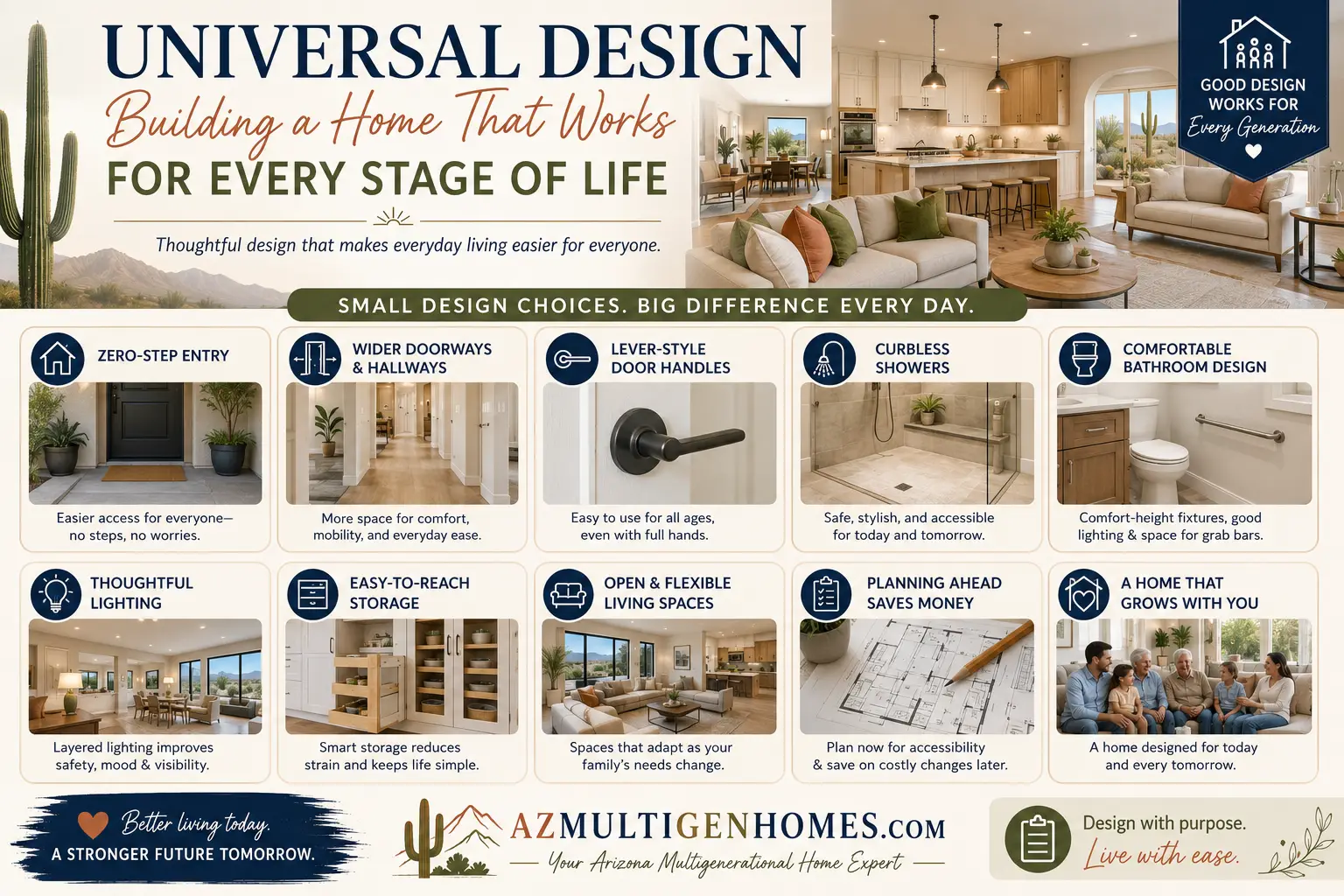
 Thoughtful design that makes everyday living easier for everyone.
Discover how Universal Design creates homes that are safer, more comfortable, and adaptable for every generation. Learn which features to consider when buying, building, or remodeling a multigenerational home in Arizona.
When people hear the phrase Universal Design, they often picture wheelchair ramps or hospital-style equipment.
In reality, Universal Design is much more than that.
It’s a philosophy of creating homes that are comfortable, functional, and welcoming for people of all ages and abilities—without sacrificing beauty or style.
Whether you’re building a new home, remodeling your current one, or searching for the perfect multigenerational home in Arizona, understanding Universal Design can help you make choices that will serve your family for decades to come.
What Is Universal Design?
Universal Design is the practice of designing spaces that are usable by as many people as possible, regardless of age, mobility, or physical ability.
Instead of waiting until a family member has difficulty navigating the home, Universal Design plans ahead.
The goal is simple:
Create a home that adapts as your family’s needs change throughout life.
Why It Matters for Multigenerational Living
Multigenerational homes bring together people at many different stages of life.
You might have:
- Grandparents who appreciate fewer stairs.
- Parents balancing busy careers.
- Teenagers who need independence.
- Young children learning to walk.
- Guests recovering from surgery.
A thoughtfully designed home makes everyday life easier for everyone—not just one generation.
Features That Make a Difference
Many Universal Design features are subtle enough that visitors may never notice them—but your family will appreciate them every day.
Zero-Step Entry
A no-step entrance makes it easier to bring in groceries, push a stroller, welcome visitors using a walker or wheelchair, and reduce trip hazards for everyone.
It’s one of the simplest ways to improve accessibility without changing the appearance of a home.
Wider Doorways and Hallways
Extra width isn’t just helpful for mobility devices.
It also makes moving furniture easier, allows family members to pass comfortably, and creates a more open feeling throughout the home.
Lever-Style Door Handles
Levers are easier to operate than traditional round doorknobs.
They’re especially helpful when your hands are full—or when arthritis makes gripping difficult.
It’s a small change with everyday benefits.
Curbless Showers
Stepping over a tub or shower curb can become more difficult over time.
A curbless shower creates a safer, more accessible bathroom while giving the space a clean, modern appearance that many homeowners love.
Comfortable Bathroom Design
Bathrooms are often the first place where accessibility becomes important.
Features like:
- Comfort-height toilets
- Reinforced walls for future grab bars
- Walk-in showers
- Non-slip flooring
- Good lighting
can make the room safer without looking institutional.
Planning ahead during construction or remodeling is usually much easier than making changes later.
Thoughtful Lighting
Good lighting improves both comfort and safety.
Layered lighting—including overhead fixtures, task lighting, and natural daylight—helps everyone navigate the home with confidence.
This becomes especially valuable as eyesight changes with age.
Easy-to-Reach Storage
Frequently used items should be easy to access without excessive bending, climbing, or stretching.
Simple storage decisions can reduce daily strain while making kitchens, bathrooms, and laundry rooms more functional for everyone.
Open, Flexible Living Spaces
One of the greatest strengths of Universal Design is flexibility.
Open living areas allow families to gather comfortably while giving rooms the ability to adapt as needs change.
A home office today may become a bedroom tomorrow.
A bonus room may later become a caregiver’s suite.
Thoughtful design creates options for the future.
Universal Design Doesn’t Mean Sacrificing Style
One of the biggest misconceptions about accessible design is that it has to look clinical.
Today’s builders and designers have embraced Universal Design in ways that are both beautiful and practical.
Modern homes can seamlessly incorporate wider doorways, elegant walk-in showers, stylish lever hardware, and open floor plans without sacrificing curb appeal or resale value.
Good design simply works better.
Planning Ahead Saves Money
Many accessibility improvements become more expensive after a home is finished.
If you’re building or remodeling, consider planning for future needs by:
- Reinforcing bathroom walls for grab bars
- Providing space for a future elevator or stairlift
- Installing blocking for handrails where appropriate
- Choosing wider doors during construction
- Designing a primary suite on the main floor
Even if you never need every feature yourself, future buyers may see tremendous value in a home that’s already prepared for changing needs.
Universal Design and Resale Value
While every market is different, homes with thoughtful, flexible layouts often appeal to a wider range of buyers.
Families with young children, people planning to age in place, and buyers seeking multigenerational living all appreciate homes that are comfortable, adaptable, and easy to navigate.
Planning for accessibility isn’t just an investment in your family’s future—it can also broaden your home’s appeal when it’s time to sell.
Final Thoughts
The best homes don’t simply meet today’s needs.
They grow with the families who live in them.
Universal Design isn’t about preparing for the worst.
It’s about creating a home that’s welcoming, comfortable, and functional through every stage of life.
Whether you’re building, remodeling, or searching for your next home, considering these features today can make a meaningful difference for many years to come.
Here are some more information for you to have in your arsenal as you consider creating your multigenerational home.
- 10 Features Families Often Forget When Choosing a Multigenerational Home
- Should We Remodel Our Home or Move?
- Can I Add a Casita to My Home?
- Designing a Home That Brings Family Together—Without Sacrificing Privacy
- Designing & Building Your Multigenerational Home
- Search Existing Multigenerational Homes
Looking for a Home Designed for the Future?
If you’re searching for a multigenerational home in Arizona—or you’re wondering whether building or remodeling is the right choice—I’d be happy to help you evaluate your options.
Together, we can find a home that supports your family’s needs today while preparing for tomorrow.
Kristin Geesey, REALTOR®, CLHMS®, SRES®, GRI
719-573-9657
info@azmultigenhomes.com
Helping Arizona families create homes that bring generations together.
Pingback: Production Builder vs. Custom Home: Which Is Right for Your Family? - Kris Geesey, Realtor®, CLHMS, SRES, GRI, Multigenerational Home Specialist
Pingback: How Much Space Does a Multigenerational Family Really Need? - Kris Geesey, Realtor®, CLHMS, SRES, GRI, Multigenerational Home Specialist
Pingback: The Hidden Costs of Building a New Home | Multigenerational Families